



Case 1 — Epidural (Transforaminal) Injection
A 50-year-old patient with a lumbar disc herniation compressing the left L4 nerve root. Using a fine needle under fluoroscopic guidance, the injection is delivered precisely along the course of the affected nerve.
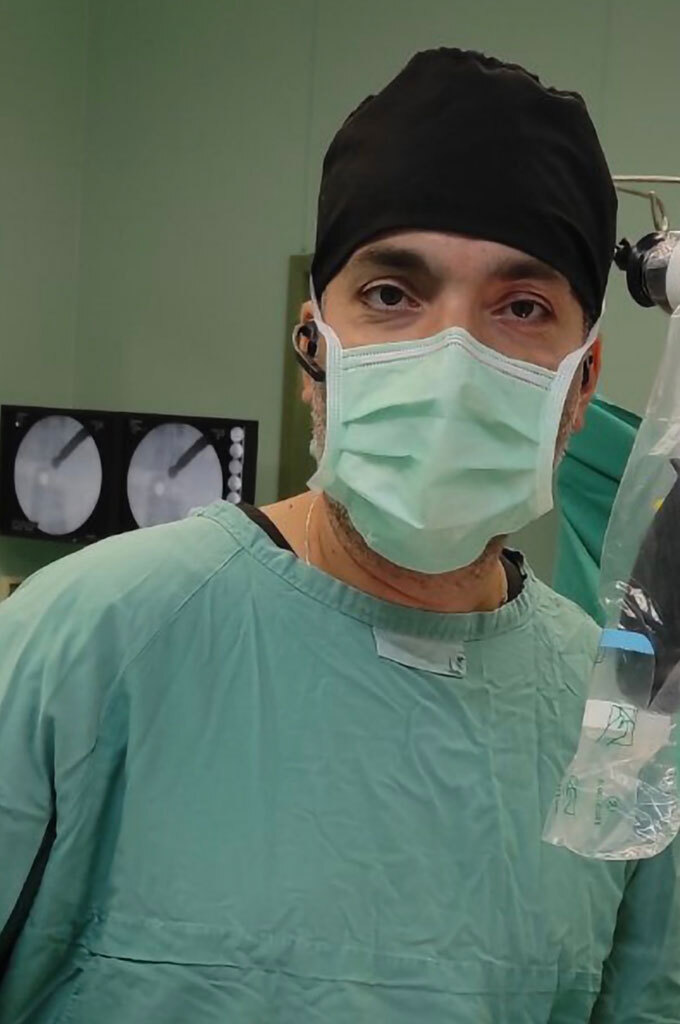
The procedure is performed in a state-of-the-art angiography suite, allowing real-time imaging control.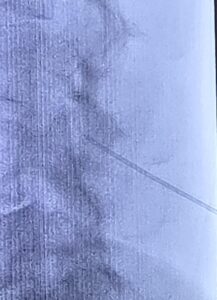
The patient returned to normal activities immediately and has remained symptom-free for months — a safe, effective option for appropriately selected patients.
Case 2 — Awake Minimally Invasive Decompression
A 50-year-old patient with lumbar spinal stenosis, presenting with severe low back pain and foot weakness.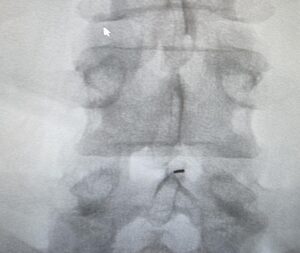
Using the latest technology, we performed a minimally invasive decompression without general anesthesia: the patient remains awake in the operating room, under sedation combined with epidural anesthesia, in close coordination with the anesthesiologist, while the surgeon proceeds with the decompression.
Throughout the procedure, three imaging sources are monitored simultaneously: the point of nerve compression on the navigation screen, the fluoroscopic image confirming the exact anatomical level, and the magnified view through the operating microscope.
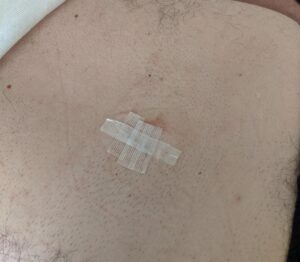
Finally, the herniated disc material — the primary cause of the stenosis — was removed. The final incision measures approximately 1 centimeter.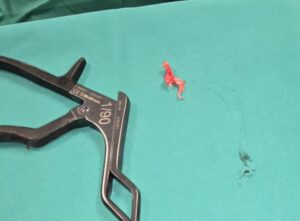
The small incision offers both cosmetic and medical benefits, with a reduced risk of complications such as infection and bleeding.