


What sciatica is
Sciatica is pain following the distribution of the sciatic nerve, caused by pressure somewhere along its course — in practice, almost always pressure on a lumbar nerve root. The two principal causes are lumbar disc herniation and spinal canal stenosis.
These are two different conditions, not two versions of the same one. They differ in natural history, in the age groups they affect, and — crucially — in how they respond to the same treatments. A treatment with proven benefit in disc herniation may have none at all in stenosis. In what follows we separate them explicitly wherever the distinction matters.
Disc herniation typically causes acute, severe pain in a specific dermatome, often in younger adults. Stenosis typically causes neurogenic intermittent claudication: pain, heaviness, or weakness in the legs on walking or standing, relieved by bending forward or sitting, usually in older patients.
First things first: when we do not wait
Before any discussion of efficacy, certain situations require immediate medical assessment:
- Difficulty passing urine, urinary retention, or incontinence of urine or stool
- Numbness in the saddle area (perineum, inner thighs, perianal region)
- Bilateral sciatica with neurological deficits
- Muscle weakness that is developing or worsening rapidly
Together these may indicate cauda equina syndrome — a surgical emergency in which delayed decompression is associated with permanent damage to sphincter and sexual function.
Also requiring urgent investigation: fever or rigors, a history of malignancy, unexplained weight loss, recent significant trauma, or immunosuppression. In these cases the question is not which treatment is superior, but what the diagnosis is.
Natural history: the fact that changes the whole picture
Any discussion of treatment efficacy is misleading unless it starts here.
Sciatica from disc herniation has an exceptionally favorable natural history. The majority of patients improve substantially without invasive treatment, with rates of successful conservative management reported in the literature at roughly 60% to 90%.
More striking still: the herniation itself often resolves spontaneously. A systematic review of the imaging literature (Chiu et al., Clinical Rehabilitation 2015) found the following probabilities of spontaneous regression:
| Type of herniation | Probability of regression |
|---|---|
| Sequestration | ~96% |
| Extrusion | ~70% |
| Protrusion | ~41% |
| Bulging | ~13% |
Paradoxically, the larger and more alarming the herniation appears on MRI, the more likely it is to resolve on its own — because exposed nucleus pulposus material is recognized as foreign and cleared by an inflammatory–macrophage response.
In stenosis the picture is different: this is a chronic degenerative process that does not resolve. Its course is usually slowly progressive or static, with remissions and flares, but without any prospect of spontaneous anatomical recovery.
How to read the numbers correctly
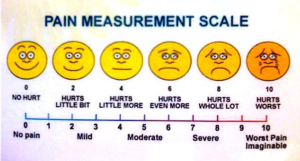
In clinical studies, pain is recorded on the visual analogue scale (VAS) or the numerical rating scale (NRS), from 0 to 10. Here a distinction is needed that is the most widely misunderstood point in this entire discussion:
The change in pain before and after a treatment is not the efficacy of that treatment.
When a patient reports 8/10 before and 3/10 after, that 5-point fall contains four quite different components: natural recovery; regression to the mean (patients seek help at the peak of their symptoms, so the next measurement will be lower regardless); the placebo effect; and only last, the true effect of the treatment.
An instructive example. In the PRECISE trial (New England Journal of Medicine 2017), leg pain fell from 6.3 to 4.6 with pregabalin — a 1.7-point drop, apparently a respectable result. In the placebo group it fell from 6.1 to 4.9. Almost identical. The true efficacy of pregabalin was zero.
For this reason, in the tables below the “effect” column always shows the additional benefit over a control group — not the total improvement the patient experiences.
The second tool is the threshold of perception. It is not enough for a benefit to exist statistically; it must be large enough for the patient to feel it. In the spine literature this threshold (the minimal clinically important difference, MCID) is placed at approximately 1.5 to 2 points on the 0–10 scale for leg pain.
The treatment ladder
On this basis, the available treatments fall into four levels. The ranking is genuinely graded — the scale is simply more compressed than usually presented, and it starts at zero.
| Level | Treatment | Effect vs control (0–10) | Duration | Above threshold? |
|---|---|---|---|---|
| 0 | Anti-TNF agents, opioids, oral corticosteroids, antidepressants | ~0 (CI crosses zero) | — | No |
| 1 | Gabapentinoids (pregabalin, gabapentin) | 0.3–0.5 (CI −0.2 to 1.2) | — | No |
| 1 | NSAIDs | 0.46 (CI −0.20 to 1.11) | weeks | No |
| 1 | Physiotherapy / exercise | small for pain; real for function | sustained | No (for pain) |
| 2 | Epidural injections — disc herniation | 0.60–0.76 (CI 0.37–1.14) | 2 weeks – 3 months | Marginally below |
| 0 | Epidural injections — stenosis | ~0 | — | No |
| 3 | Surgical decompression | 1.70 (CI 1.20–2.20) at 6–8 weeks | converges at 1–2 years | Yes |
That is: 0 → 0.4 → 0.7 → 1.7. The ladder is monotonic, and surgery is the only intervention that exceeds the threshold of perception relative to a control group.
An important clarification in patients’ favor. A patient who undergoes surgery does not experience a 1.7-point improvement — they typically experience a fall of 4 to 6 points from their preoperative score. This is entirely true and is what they will actually feel. It is simply that part of that improvement would have occurred anyway with time; the 1.7 points are the portion attributable to the operation alone.
The second axis: time to relief
Ranking by the magnitude of benefit is not the only ranking that matters. There is a second axis, equally well documented, on which the differences are far larger: how quickly relief arrives.
- Peul et al. (New England Journal of Medicine 2007, n=283) showed that early surgery provides markedly faster relief than prolonged conservative care — but at 1 year, 2 years, and 5 years the outcomes were essentially equivalent.
- Bailey et al. (New England Journal of Medicine 2020), in patients with chronic sciatica of 4–12 months’ duration, showed clear superiority of microdiscectomy at 6 months, with the advantage narrowing by 2 years.
- The SPORT trial (JAMA 2006) found no significant difference on intention-to-treat analysis because of extensive crossover between arms; as-treated analysis favored surgery.
How patients themselves “vote.” We do not have reliable comparative satisfaction rates by treatment, and we will not invent them. We do, however, have something more objective: what patients chose when given the opportunity to change their minds.
- In Peul, 44% of those randomized to conservative care ultimately underwent surgery for persistent symptoms.
- In Bailey, the corresponding figure was 38%.
In other words, roughly four in ten patients who started conservatively judged for themselves that waiting was not enough. At the same time, six in ten never needed an operation. Both of these figures matter equally in an honest conversation.
Level-by-level analysis
Level 0 — no measurable benefit over placebo
This is the category that causes the greatest surprise, because it includes drugs that are very widely prescribed.
Oral corticosteroids. Goldberg et al. (JAMA 2015, n=269, MRI-confirmed herniation) showed that prednisone does not reduce pain: a difference of 0.3 points at 3 weeks (95% CI −0.4 to 1.0) and 0.6 at one year. There was a small improvement in function, but no reduction in the proportion eventually operated on, with adverse events in 49.2% versus 23.9%.
Antidepressants. The meta-analysis by Ferreira et al. (BMJ 2021, 33 studies, 5,318 patients) found that for sciatica specifically the evidence is of very low certainty and does not permit conclusions, while SNRIs significantly increase adverse events.
Opioids. The OPAL trial (Lancet 2023, n=347) showed that oxycodone is no better than placebo, and that at one year patients who received it had slightly worse pain and an increased risk of misuse.
Anti-TNF biologic agents. Despite a theoretically attractive rationale — radicular inflammation is indeed partly TNF-dependent — the randomized trials have been negative: infliximab (Korhonen, Spine 2006), etanercept (Cohen, Annals of Internal Medicine 2012), and adalimumab with a non-significant difference of 13.8 points on the 0–100 scale and a confidence interval crossing zero, from −11.5 to 39.0 (Genevay, Arthritis & Rheumatism 2010). The meta-analysis by Wang et al. (PLoS One 2014, 531 patients) found no significant reduction in pain at any time point. The North American Spine Society recommends explicitly against them. This is not a treatment that is “too expensive to use” — it is a treatment that has not been shown to work.
Epidural injections in stenosis. The LESS trial (New England Journal of Medicine 2014, n=400) compared epidural corticosteroid plus local anesthetic against local anesthetic alone. Adding the corticosteroid conferred no meaningful benefit. NICE guidance recommends against epidural injections for neurogenic claudication from central stenosis.
Level 1 — sub-threshold benefit
Gabapentinoids (pregabalin, gabapentin). The PRECISE trial (n=209) found no benefit over placebo: 0.5 points at 8 weeks (95% CI −0.2 to 1.2) and 0.3 at one year, with nearly twice as many adverse events, mainly dizziness. Gabapentin shares the same mechanism of action and there is no basis for the belief that it performs better: the meta-analysis by Enke et al. (CMAJ 2018, 9 trials, 859 patients) concluded there is moderate-to-high quality evidence that anticonvulsants are ineffective, with high-quality evidence of increased risk of adverse events. NICE recommends explicitly against their use in sciatica.
NSAIDs. The Cochrane review (Rasmussen-Barr et al., 10 studies, 1,651 patients) found no statistically significant superiority for pain reduction (mean difference −4.56 on the 0–100 scale, 95% CI −11.11 to 1.99), although there is some evidence of benefit for “global improvement.” They remain a reasonable first-line option for short-term relief — with realistic expectations and attention to gastrointestinal, renal, and cardiovascular risk.
Physiotherapy and therapeutic exercise. The direct benefit for pain is small. Nonetheless, exercise remains the foundation of every international guideline, for three reasons: it is safe, it improves function and return to activity, and it addresses the movement avoidance that perpetuates chronicity. In stenosis in particular, structured programs give results comparable to surgery in mild and moderate cases.
Physiotherapy is the clearest example of a treatment that is worth doing despite a small effect on pain — because its cost, risk, and adverse-event burden are essentially nil.
Level 2 — small, real, short-term benefit
Epidural corticosteroid injections in disc herniation with radiculopathy. Here there is a real but small and short-lived benefit. The meta-analysis by Pinto et al. (Annals of Internal Medicine 2012), which included only placebo-controlled trials, found a reduction in leg pain of roughly 6 points on the 0–100 scale in the short term (2 weeks to 3 months), with no long-term benefit. The review by Chou et al. (Annals of Internal Medicine 2015) reached a similar magnitude (weighted mean difference −7.55, 95% CI −11.4 to −3.74), with a short-term reduction in the likelihood of surgery (relative risk 0.62, 95% CI 0.41–0.92) but no long-term difference.
Practical conclusion: the epidural injection is a useful tool for bridging an acute, severe episode of sciatica from disc herniation, buying time for natural recovery. It is not equivalent to surgical decompression, nor does it offer the duration of benefit often attributed to it.
Level 3 — clinically significant benefit
Surgical decompression. This is the only intervention with a documented effect above the threshold of perception: 1.70 points on the 0–10 scale (95% CI 1.20–2.20) at 6–8 weeks in pooled randomized data. That benefit converges with conservative care by 1–2 years in patients with disc herniation — which is why the real discussion concerns time, not destination.
In stenosis, decompression has well-established benefit in patients with moderate to severe symptoms not responding to conservative care. An important finding: Försth et al. (New England Journal of Medicine 2016) showed that adding fusion does not improve outcomes compared with decompression alone, even in the presence of degenerative spondylolisthesis — an argument for less extensive procedures.
In the presence of muscle weakness, surgery is the treatment of choice, since it relieves pressure on the nerve root faster than any other intervention. The severity and duration of the deficit influence the likelihood of full neurological recovery.
Risks: recurrence of herniation of the order of 5–10%, with the overall complication rate — summing dural tears, infections, recurrences, and reoperations — approaching 10%. Serious neurological complications are considerably rarer.
The price of each level
Rising efficacy is accompanied by rising cost and risk. But there is a second factor that is often overlooked: repeatability. A treatment that must be repeated has an entirely different economic profile from a one-off intervention, even when the cost of the individual session is lower.
| Level | Cost per session / procedure | Typical repetition | Cost per year | Principal risk |
|---|---|---|---|---|
| 0–1 (drug therapy) | low | continuous | low, but indefinite | adverse effects, often underestimated |
| 1 (physiotherapy) | moderate | courses of sessions | moderate, recurring | essentially none |
| 2 (epidural injections) | €700–1,000 | 2–4 times per year | €1,400 – 4,000, every year | rare but serious neurological complications |
| 3 (surgery) | €5,500 – 7,500 | as a rule, once | €5,500 – 7,500 in total | overall complications ~10%, recurrence 5–10% |
The figures above are
indicative totals for the whole episode of care, including hospital charges and
materials. For the fees of the medical team specifically, see the Fees &
Pricing Policy page.
Prices depend on the institution where the procedure is performed and on insurance coverage.
The critical point is the difference between recurring and one-off cost. The epidural injection appears considerably cheaper at the outset — and for the patient who needs one or two courses while natural recovery takes place, it genuinely is. But for the patient with persistent symptoms requiring injections year after year, the cumulative cost overtakes that of surgery somewhere between the second and fifth year — typically around the third — and continues to accrue thereafter.
Surgical decompression, by contrast, is as a rule performed once. Its cost is higher at the outset but does not multiply; even allowing for the 5–10% probability of recurrence, the expected total expenditure remains finite and predictable.
This does not mean surgery is by definition the cheaper option. It means that cost comparison must be made over a horizon of years rather than per session — and that the answer depends decisively on whether the symptoms are expected to settle or to persist.
On the safety of epidural injections, greater precision is required than the usual reassurance. Hematoma at the injection site is indeed extremely rare. The most important risk, however, is a different one: in 2014 the FDA issued a warning regarding serious neurological events, including stroke, spinal cord infarction, and paralysis. A critical finding: the great majority of these events were associated with particulate preparations, mainly in transforaminal injections.
In absolute terms such events remain rare — millions of injections are performed worldwide each year. But this is precisely why injections should be performed under fluoroscopic or CT guidance and with non-particulate preparations.
How we decide in practice
There is no single pathway that fits everyone. The decision is shaped by the diagnosis, the duration of symptoms, the severity of pain, the presence of neurological deficit, and the patient’s own priorities.
In the absence of red flags and neurological deficit, the sensible approach over the first 6–8 weeks is: explanation of the favorable natural history, maintaining activity within the limits of pain, physiotherapy, and short-term analgesia. The aim is not to “cure the herniation” — it is to make the symptoms manageable while nature does the work. Statistically, six in ten patients will need nothing further.
Where severe pain persists beyond 6–8 weeks, or where the pain is unbearable from the outset, we move to levels 2 and 3: epidural injection (mainly in disc herniation) or surgical decompression. This transition is entirely legitimate and is not a “failure” — it is simply the recognition that, for this particular patient, waiting carries a cost not worth paying.
In the presence of muscle weakness, surgical assessment should not be delayed.
In the presence of cauda equina signs, management is an emergency.
In stenosis, we do not expect spontaneous anatomical improvement. We begin with a structured exercise program; where neurogenic claudication persists and significantly limits function, decompression is well supported — with epidural injections playing a considerably smaller role here than in disc herniation. The principal measure guiding the decision here is not pain intensity but walking distance and function.
The bottom line
Sciatica from disc herniation is, in the great majority of cases, a self-limiting condition with an excellent prognosis. Our treatments change the journey and its duration far more than they change the destination.
This does not diminish their value. For a patient in unbearable pain, being relieved in two weeks rather than six months is an enormous difference in quality of life — and that is precisely what surgical decompression offers, with evidence no other intervention can match.
It does mean, however, that the choice should be made with realistic expectations, an honest account of the risks, and a clear understanding of what has actually been proven and what has not.
What changes when sciatica persists beyond six months
Everything above applies mainly to the patient in the first few months. Once pain has lasted more than six months the picture changes — and the figures below come from studies that examined precisely this population.
When time stops working in our favor
Spontaneous improvement in sciatica is steepest in the first three months and levels off at around four to six months. In the large UK primary care study ATLAS (Konstantinou et al., Spine Journal 2018; 609 patients), mean leg pain fell from 5.2 at baseline to 2.8 at four months — and then barely moved, reaching only 2.4 at twelve months. Overall, just 55% of patients had clear improvement at one year. Longer pain duration was the strongest negative predictor of improvement.
This must be stated precisely, however: spontaneous improvement slows down, it does not stop. Even biological resorption of the herniation continues beyond six months. The critical finding is a different one: once symptom duration exceeds one year, significant resorption is seen in only 6.4%, compared with roughly one third when duration is shorter.
What the trial of exactly this patient shows
Bailey et al. (New England Journal of Medicine 2020) randomized 128 patients with sciatica of 4 to 12 months’ duration to microdiscectomy or standardized conservative care:
| Leg pain (0–10) | Surgery | Conservative |
|---|---|---|
| Baseline | 7.7 | 8.0 |
| 6 months | 2.8 | 5.2 |
| 12 months | 2.6 | 4.7 |
The difference at six months was 2.4 points (95% CI 1.4–3.4; p<0.001) — clearly above the threshold of perception.
Two things follow. First, the surgical group fell by 4.9 points in absolute terms. Second, and more importantly: the conservative group did improve, by 2.8 points, but then plateaued at around 5/10 and stayed there — with no meaningful further improvement between six and twelve months. In the chronic patient, waiting no longer delivers what it delivers in the acute one.
Duration as a prognostic factor
The Swedish Swespine registry, covering 6,216 discectomies, showed that surgery relieves pain substantially regardless of duration (mean reduction 4.83 points), but with a clear gradient: those operated within three months improved more (5.59 points), while duration beyond twelve months almost doubled the risk of pain remaining unchanged at one year (OR 2.41; 95% CI 1.81–3.21).
The same applies to conservative care: in SPORT, patients with symptoms lasting more than six months improved less with both strategies. Delay is not neutral for either option.
A point of honesty: when pain has learned to persist
In chronic radiculopathy a significant proportion of patients develop neuropathic features and central sensitization — the nervous system maintains the pain even after the cause is removed. Prospective studies show that preoperative central sensitization predicts worse outcome after discectomy and after decompression for stenosis.
In practice: the more chronic the picture, the more carefully we must confirm that the pain is still explained by nerve root compression. Decompression relieves the compression; it does not always relieve the pain.
The exception: muscle weakness
Here time is measured in days, not months. In a series of 116 patients with motor deficit, full recovery of strength was achieved in 76%, but the deficit persisted in 16% of mild and 39% of severe cases; those who recovered fully had been operated on significantly earlier (mean 35 versus 69 days).
The economic dimension
The cost analysis of the Bailey trial itself (Glennie et al., Clinical Orthopaedics and Related Research 2022) found that in chronic sciatica surgery is highly cost-effective — approximately CAD 5,800 per quality-adjusted life year. For comparison, in subacute sciatica the corresponding figure was €41,000 (van den Hout et al., BMJ 2008). Surgery therefore does not merely become relatively more effective with chronicity — it becomes a markedly better economic choice as well.
Comparison table for the chronic patient
| Lvl | Treatment | Pain reduction at 6 months | Evidence | Cost / year |
|---|---|---|---|---|
| 0 | Opioids, oral corticosteroids, anti-TNF agents | no proven benefit | negative randomized trials | €100 – 300 |
| 1 | Gabapentinoids | ~0 versus placebo | direct (PRECISE) | €200 – 600 |
| 1–2 | Full conservative package (physiotherapy + drugs ± injections) | 2.8 points (8.0 → 5.2), plateau thereafter | direct (Bailey control arm) | €1,500 – 4,000 |
| 2 | Epidural injections alone | no data beyond 6 months | — | €1,400 – 2,800 |
| 3 | Surgical decompression | 4.9 points (7.7 → 2.8) | direct (Bailey; conf. Swespine) | €5,500 – 7,500 once |
The figures above are indicative totals for the whole episode of care, including hospital charges and materials. For the fees of the medical team specifically, see the Fees & Pricing Policy page.
The strength of this table lies in the last two rows, both of which are directly evidenced. In the control arm of the Bailey trial, patients received standardized conservative care with the option of epidural injection — essentially everything available short of surgery. The result was 2.8 points, with no further improvement after six months. Surgery delivered 4.9 points.
In the chronic patient, therefore, the choice is not between several nearly equivalent levels, as it is in the acute phase. Realistically, it is between two paths.
The practical conclusion
The six-month mark is not arbitrary. The North American Spine Society guidelines explicitly suggest surgical intervention before six months in patients whose symptoms are severe enough to warrant surgery, noting that earlier surgery is associated with faster recovery and improved long-term outcomes.
This does not mean surgery becomes mandatory after six months — it means that waiting is no longer a neutral option, and that a substantive discussion is warranted where pain remains limiting and imaging correlates with the symptoms.
Click here to watch Dr. Blionas online presentation on how to avoid surgery when you got sciatica
References
- Mathieson S, Maher CG, McLachlan AJ, et al. Trial of Pregabalin for Acute and Chronic Sciatica (PRECISE). N Engl J Med 2017;376:1111–1121.
- Enke O, New HA, New CH, et al. Anticonvulsants in the treatment of low back pain and lumbar radicular pain: a systematic review and meta-analysis. CMAJ 2018;190:E786–E793.
- Goldberg H, Firtch W, Tyburski M, et al. Oral steroids for acute radiculopathy due to a herniated lumbar disk: a randomized clinical trial. JAMA 2015;313:1915–1923.
- Ferreira GE, McLachlan AJ, Lin CC, et al. Efficacy and safety of antidepressants for the treatment of back pain and osteoarthritis: systematic review and meta-analysis. BMJ 2021;372:m4825.
- Rasmussen-Barr E, Held U, Grooten WJA, et al. Non-steroidal anti-inflammatory drugs for sciatica. Cochrane Database Syst Rev 2016; and Spine 2017;42:586–594.
- Jones CMP, Day RO, Koes BW, et al. Opioid analgesia for acute low back pain and neck pain (OPAL): a randomised placebo-controlled trial. Lancet 2023;402:304–312.
- Pinto RZ, Maher CG, Ferreira ML, et al. Epidural corticosteroid injections in the management of sciatica: a systematic review and meta-analysis. Ann Intern Med 2012;157:865–877.
- Chou R, Hashimoto R, Friedly J, et al. Epidural corticosteroid injections for radiculopathy and spinal stenosis: a systematic review and meta-analysis. Ann Intern Med 2015;163:373–381.
- Friedly JL, Comstock BA, Turner JA, et al. A randomized trial of epidural glucocorticoid injections for spinal stenosis (LESS). N Engl J Med 2014;371:11–21.
- Weinstein JN, Tosteson TD, Lurie JD, et al. Surgical vs nonoperative treatment for lumbar disk herniation: the Spine Patient Outcomes Research Trial (SPORT). JAMA 2006;296:2441–2450.
- Peul WC, van Houwelingen HC, van den Hout WB, et al. Surgery versus prolonged conservative treatment for sciatica. N Engl J Med 2007;356:2245–2256; 2-year results BMJ 2008;336:1355–1358. Link
- Bailey CS, Rasoulinejad P, Taylor D, et al. Surgery versus conservative care for persistent sciatica lasting 4 to 12 months. N Engl J Med 2020;382:1093–1102. Link
- Försth P, Ólafsson G, Carlsson T, et al. A randomized, controlled trial of fusion surgery for lumbar spinal stenosis. N Engl J Med 2016;374:1413–1423.
- Chiu CC, Chuang TY, Chang KH, et al. The probability of spontaneous regression of lumbar herniated disc: a systematic review. Clin Rehabil 2015;29:184–195.
- Genevay S, Viatte S, Finckh A, et al. Adalimumab in severe and acute sciatica: a multicenter, randomized, double-blind, placebo-controlled trial. Arthritis Rheum 2010;62:2339–2346.
- Korhonen T, Karppinen J, Paimela L, et al. The treatment of disc-herniation-induced sciatica with infliximab. Spine 2006;31:2759–2766.
- Cohen SP, White RL, Kurihara C, et al. Epidural steroids, etanercept, or saline in subacute sciatica: a multicenter, randomized trial. Ann Intern Med 2012;156:551–559.
- Wang YF, Chen PY, Chang W, et al. Clinical significance of tumor necrosis factor-α inhibitors in the treatment of sciatica: a systematic review and meta-analysis. PLoS One 2014;9:e103147.
- Racoosin JA, Seymour SM, Cascio L, Gill R. Serious neurologic events after epidural glucocorticoid injection — the FDA’s risk assessment. N Engl J Med 2015;373:2299–2301.
- National Institute for Health and Care Excellence. Low back pain and sciatica in over 16s: assessment and management. NICE guideline NG59. Link
- Kreiner DS, Hwang SW, Easa JE, et al. An evidence-based clinical guideline for the diagnosis and treatment of lumbar disc herniation with radiculopathy. Spine J 2014;14:180–191.
- North American Spine Society. Evidence-based clinical guidelines: diagnosis and treatment of degenerative lumbar spinal stenosis. Spine J 2013;13:734–743.
- Qaseem A, Wilt TJ, McLean RM, Forciea MA. Noninvasive treatments for acute, subacute, and chronic low back pain: a clinical practice guideline from the American College of Physicians. Ann Intern Med 2017;166:514–530.
- Konstantinou K, Dunn KM, Ogollah R, et al. Prognosis of sciatica and back-related leg pain in primary care: the ATLAS cohort. Spine J 2018;18:1030–1040. Link
- Association of extended duration of sciatic leg pain with worse outcome after lumbar disc herniation surgery: a register study in 6216 patients (Swespine). J Neurosurg Spine 2021;34:759–767. Link
- Rihn JA, Hilibrand AS, Radcliff K, et al. Duration of symptoms resulting from lumbar disc herniation: effect on treatment outcomes (SPORT). J Bone Joint Surg Am 2011;93:1906–1914. Link
- Postacchini F, Giannicola G, Cinotti G. Recovery of motor deficits after microdiscectomy for lumbar disc herniation. J Bone Joint Surg Br 2002;84-B:1040–1045. Link
- Akeda K, Yamada J, Takegami N, et al. Central sensitization as a predictive factor for the surgical outcome in patients with lumbar spinal stenosis. Eur Spine J 2023;32:4200–4209. Link
- Glennie RA, Urquhart JC, Koto P, et al. Microdiscectomy is more cost-effective than a 6-month nonsurgical care regimen for chronic radiculopathy. Clin Orthop Relat Res 2022;480:574–584. Link
- van den Hout WB, Peul WC, Koes BW, et al. Prolonged conservative care versus early surgery in patients with sciatica: cost utility analysis alongside a randomised controlled trial. BMJ 2008;336:1351–1354. Link
- Lumbar disc herniation resorption: when and how does it occur? (serial MRI evidence synthesis), 2025. Link
- ISASS Policy Guideline — Surgical treatment of lumbar disc herniation with radiculopathy. Link