



Laminectomy is one of the operations used to decompress the neural structures — the spinal cord and nerve roots — in spinal stenosis, whether cervical or lumbar. Its purpose is to relieve pressure on the neural structures by removing part of the bony and soft-tissue elements of the canal wall, so that the nerves regain space and the symptoms subside.
What the operation involves
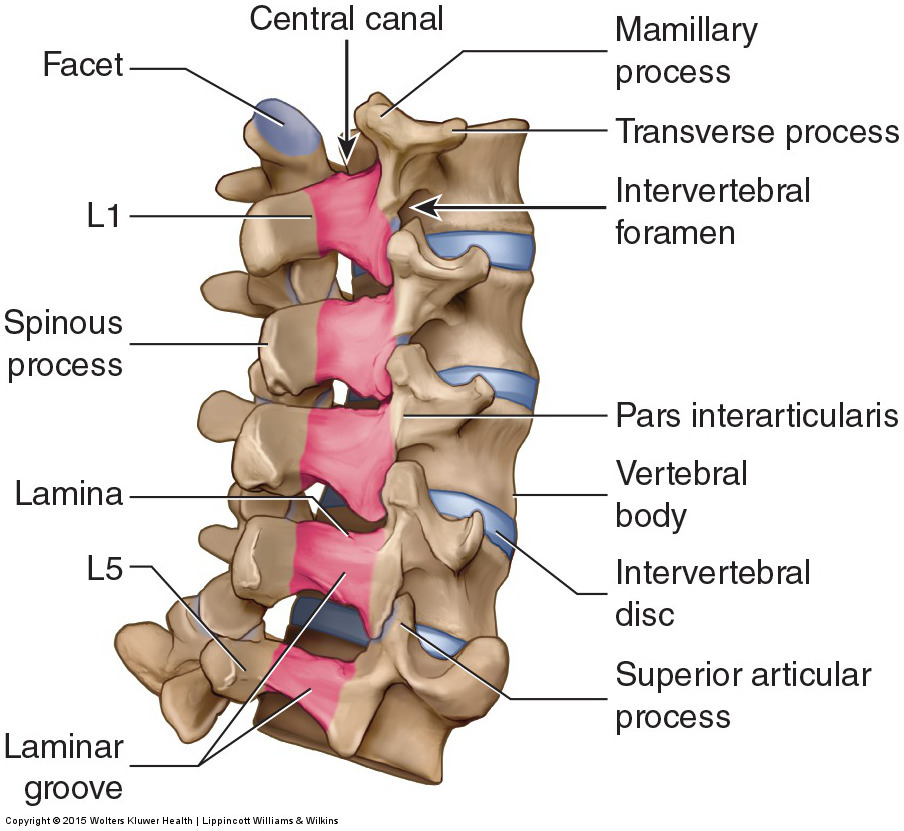
The lamina is the posterior part of the vertebra, forming the back wall of the spinal canal. In stenosis, hypertrophy of the bone and of the ligaments — chiefly the ligamentum flavum — narrows the canal and compresses its contents.
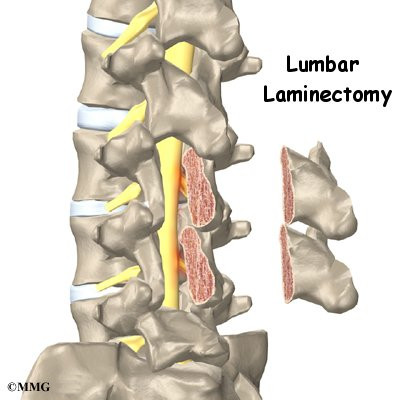
In a laminectomy, the surgeon removes the lamina, together with any hypertrophied ligament and bony osteophytes, opening the canal and decompressing the neural structures. Where only part of the lamina needs to be removed to decompress the point of compression, the procedure is a hemilaminectomy — a more limited, targeted version of the same operation.
The pressure is relieved immediately. Where the level is unstable, or would become unstable once the bone is removed, fusion is added to stabilize it.
Minimally invasive laminectomy
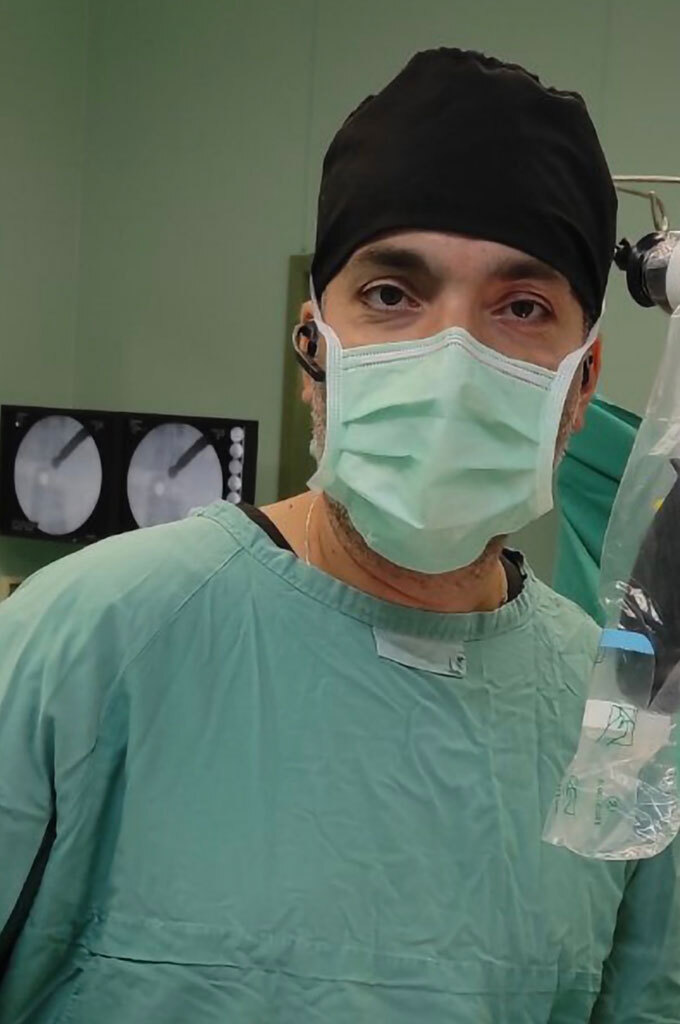
Dr. Alexandros Blionas, who trained in minimally invasive spine surgery at American Neurosurgical Associates and with specialists at leading centers, performs laminectomy through very small incisions wherever possible.
Through an incision of a few millimeters, a micro-tube creates a precise anatomical corridor to the affected level; a 3D 4K video-robotic microscope (exoscope) provides magnified, detailed vision through that corridor; and specialized micro-instruments are used to remove the compressing structures without cutting or detaching the surrounding muscles. The reduced muscle trauma is what allows the shorter hospital stay, the reduced blood loss, the lower postoperative pain, and the faster return to daily activities.
What the patient can expect
Recovery depends on the extent of the decompression and on whether fusion was also required. In an isolated minimally invasive laminectomy, mobilization is usually possible on the same or the following day, with a short hospital stay and return to normal activities within a few weeks, avoiding heavy lifting and forceful bending in the early period.
Careful, individualized treatment selection. Laminectomy is proposed only when conservative management has failed or is not appropriate. Every case is assessed individually through the AI-supported Personalized Evidence-Based Treatment Analysis, based on the patient’s own clinical characteristics and the most recent, validated evidence, so that each patient is fully informed of what to expect and how their recovery is likely to proceed.
See also: Lumbar spinal stenosis
See also: Cervical spinal stenosis
See also: Lumbar spinal fusion
See also: Minimally invasive spine surgery
See also: Awake Same-Day Minimally Invasive Lumbar Decompression