



What it is
An intracranial haematoma is a significant collection of blood within the brain or on its surface. Most are emergencies, arising after a head injury such as a road traffic accident or a fall from height.
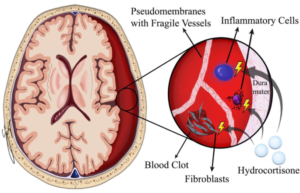
A chronic subdural haematoma is a collection of blood on the surface of the brain that develops after a head injury — often a minor one — or, in some cases, spontaneously, following the rupture of a fragile bridging vein. Its distinguishing feature is precisely its chronicity: chronic subdural haematomas do not present as emergencies. They develop slowly, and the symptoms appear gradually.
The condition is commonest in older patients, and the risk is increased in those taking anticoagulant or antiplatelet medication.
Symptoms
The principal symptoms are weakness of one side of the body (the arm and leg on the right or the left), headache, seizures, and cognitive decline. They appear gradually, as the haematoma organizes and exerts increasing pressure on the brain.
Because the onset is insidious, the picture is frequently mistaken in older patients for dementia or for the aftermath of a stroke — which is one reason imaging matters whenever these symptoms develop over weeks in someone with a history, however trivial, of a head injury.
Treatment
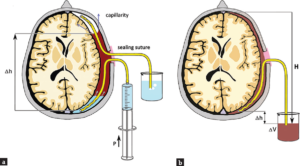
A chronic subdural haematoma is treated with a minimally invasive technique. Through two small skin incisions, small burr holes are made in the skull. The haematoma is drained through them by aspiration and, after repeated irrigation with warm saline, the collection is fully washed out, relieving the brain of the pressure exerted by the organized haematoma.
Most patients can be discharged within a short time of the operation and return gradually to their usual activities. The technique carries a low complication rate and high efficacy, and frequently produces a dramatic improvement in quality of life.
It should be noted that chronic subdural haematomas can recur, and a proportion of patients require a second procedure. Follow-up imaging after surgery is therefore part of routine management.